IT Diagnostic

See Your IT the Way an Attacker Would

Every relationship we have starts the same way: with a cybersecurity risk assessment of the client’s environment. We have made that first step something you can book on its own.

You get the full IT infrastructure assessment and a ranked, vendor-neutral report. What you do with it is up to you.

Louisville Geek cybersecurity expert analyzing security ecosystem to uncover gaps and strengthen defenses

The Diagnostic: One Review, Your Whole Environment

Our IT diagnostic health check is an independent review of your IT infrastructure and security posture. It shows you where your security risks sit and what their potential impact could be.

Part of the work runs like a focused IT security audit. The rest runs like a wider IT infrastructure assessment. We test how your environment holds up, document the identified risks, and rank them so the urgent items are obvious.

This is not an open-ended consultation. It is a scoped engagement with a set process and a defined deliverable, so you know what you are getting and what it costs before we begin.

250+ clients

Local Louisville team

Partner-backed security stack

24/7 in-house support

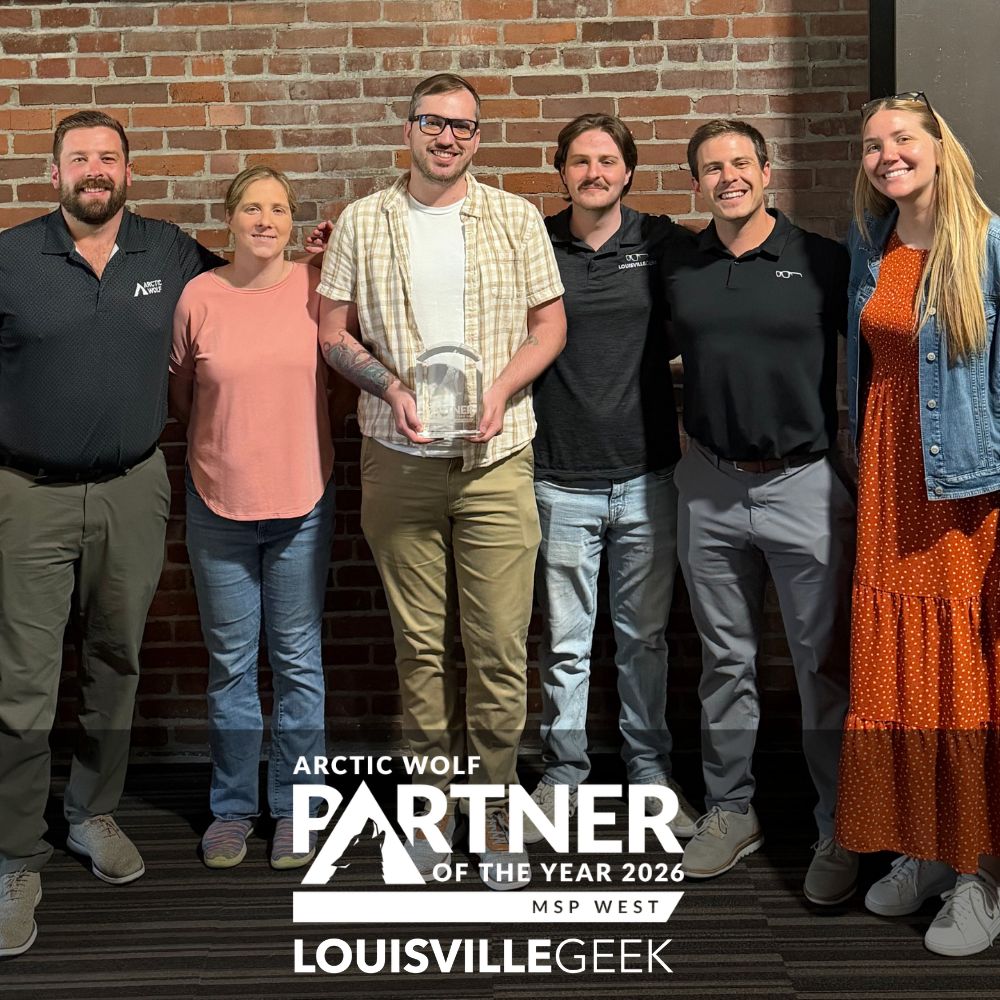
Arctic Wolf 2026 MSP West Partner of the Year

Louisville Geek was named global cybersecurity leader Arctic Wolf’s 2026 MSP West Partner of the Year due to its leadership in helping organizations strengthen security operations and defend against sophisticated AI-driven cyber threats.

This award reflects the results we deliver for our clients every day, and the powerful impact we have been able to make through our partnership with Arctic Wolf.

Ben Taylor
Louisville Geek President & CRO

The Fit: Made for the Regulated Mid-Market Crowd

This assessment is built for regulated mid-market organizations where a failed audit carries real consequences, particularly in healthcare, manufacturing, and financial services. It fits best when a specific event has put your IT and security under the spotlight.

A renewal or review is coming up?

You have a cyber insurance renewal or compliance review approaching and need evidence to ensure compliance.

Internal IT is stretched?

Your team is capable but stretched, and security work keeps getting pushed down the list.

You inherited an environment?

A merger, acquisition, or leadership change left you responsible for systems nobody has fully mapped.

Leadership wants a straight answer?

Someone at the top needs to understand the organization’s exposure to cyber risks before approving the next budget.

The Process: How We Run the Diagnostic

1. Scoping Call

A short call helps us understand your environment and the business goals behind it, along with whatever prompted the review. This sets the boundaries of the engagement so the work matches what your organization needs.

2. Review & Testing

Our security team examines your network infrastructure, access controls, backup setup, and security tools. Depending on scope, this can include vulnerability scanning and penetration testing.

3. Analysis & Ranking

We sort and score the findings, so risks are based on their potential impact rise to the top, and lower-priority items are marked clearly. This is the step that turns the security audit into a plan.

4. Readout & Report

We walk you and your leadership through the findings in plain language. You leave with a written report that documents the security gaps we identified and the order in which to close them.

The Scope: Six Key Areas We Review

A network security audit or IT infrastructure assessment only helps if it covers the places attackers actually go. Our IT diagnostic looks across the systems that run your business operations and the controls meant to protect them, then checks each area for security gaps.

AreaWhat We Look AtWhy It Matters
Network and infrastructureFirewalls, switching, segmentation, remote access Weak network infrastructure is a common entry point for security incidents
Identity and accessAccess controls, multi-factor authentication, admin rights, offboarding Mismanaged access sits behind a large share of cyber risks
Endpoint and emailDevice protection, patching, email filtering Laptops and inboxes are where most attacks land
Data and recoveryBackups, restore testing, retentionRecovery readiness decides how fast you return from an incident
Compliance and insurancePolicy evidence, logging, documentationThis is the proof you need to ensure compliance and pass insurer questionnaires
Threat exposureUnderstanding what attackers can see from the outside by evaluating internet-facing assets, exposed services, and changes that may expand your attack surface.Finding and prioritizing security risks before attackers can exploit them.

Louisville Geek: The Team Behind the Report

In-House Team

We run a 105-person team based in Louisville, and our engineers are all-W2 staff rather than subcontractors. When you call, you reach the people who already know your environment.

Security Specialization

We run a hardened stack that includes globally ranked security vendors. Our security teams handle detection and response for organizations that need strict processes.

Strategy Included

Every managed agreement comes with vCIO advisory, so you have a strategic voice mapping your IT to your business goals. It is part of the relationship, not a second contract with its own billing rate.

The Next Step: Where the Diagnostic Leads

Following the diagnostic, you get a board-ready report that lists the identified risks in priority order, explains the potential impact of each, and tells you what to do about it. It is vendor-neutral, so the recommendations reflect your environment.

This gives whoever owns risk management something to act on and allows the budget to follow real exposure. You can act on the report with your current team or another provider, with no obligation to continue.

Our in-house team can also carry the findings straight into a managed proposal. Nothing gets rediscovered or re-priced, so the numbers hold. From there, security sits inside a co-managed or fully managed agreement with vCIO strategy included, and someone is continuously monitoring the environment.


IT decision-maker reviewing co-managed IT services

FAQ

An IT assessment is an independent review of your technology environment that finds where your risks, gaps, and wasted spend sit, then ranks them so you know what to address first. A good IT infrastructure assessment looks past the surface and tests how your systems actually hold up.

Our assessment covers:

  • Network infrastructure and how it is segmented and defended
  • Access controls, identity, and how cleanly people are onboarded and offboarded
  • Backup and recovery readiness
  • Security tools already in place and whether they are doing their job
  • Cyber-insurance evidence

The two overlap, but they answer different questions.

  • An IT audit measures your environment against a defined standard or requirement, such as a compliance framework or a cyber-insurance questionnaire. It is a pass-or-fail style check of whether specific controls exist.
  • A security assessment is broader. Cybersecurity risk assessment services look at your whole security posture, weigh the security risks by their potential impact, and give you prioritized recommendations.

We evaluate risk by testing your environment the way a real threat would approach it, then scoring what we find. Our cybersecurity risk assessment follows a set method:

  • We identiy exposure. We review your external-facing assets, including internet-accessible systems, services, and applications, to uncover potential entry points an attacker could target.
  • We measure impact. Every finding is scored on how likely it is and what it would cost your business operations if exploited.
  • We prioritize. Findings are organized to highlight the issues that present the greatest risk to your business, while clearly identifying lower-priority items that can be addressed later.

The result is a ranked list of security gaps tied to real potential impact.

The return comes from decisions you can only make once you have the facts. A cybersecurity risk assessment pays for itself in a few concrete ways:

  • Avoided incidents. Finding and closing security gaps before an attacker reaches them costs a fraction of recovering from a breach.
  • Better spend. The report shows where you are overpaying for tools you do not need and underinvested where it counts.
  • Faster approvals. A ranked, board-ready report helps leadership make informed decisions quickly instead of stalling.
  • Insurance and compliance leverage. Documented findings help you ensure compliance and answer insurer questionnaires, which can affect premiums and coverage.

In most cases, no. A large part of the IT infrastructure assessment is done remotely, including configuration review and continuous monitoring for changes across your systems. Remote work keeps the engagement efficient and minimizes disruption to your day.

Some situations still call for an onsite visit, such as reviewing physical access controls, wiring, or on-premise hardware. We confirm what needs to happen onsite during the scoping call, so you know the plan before we begin. For clients in Louisville or Indianapolis, our local team can be there in person when the work requires it.